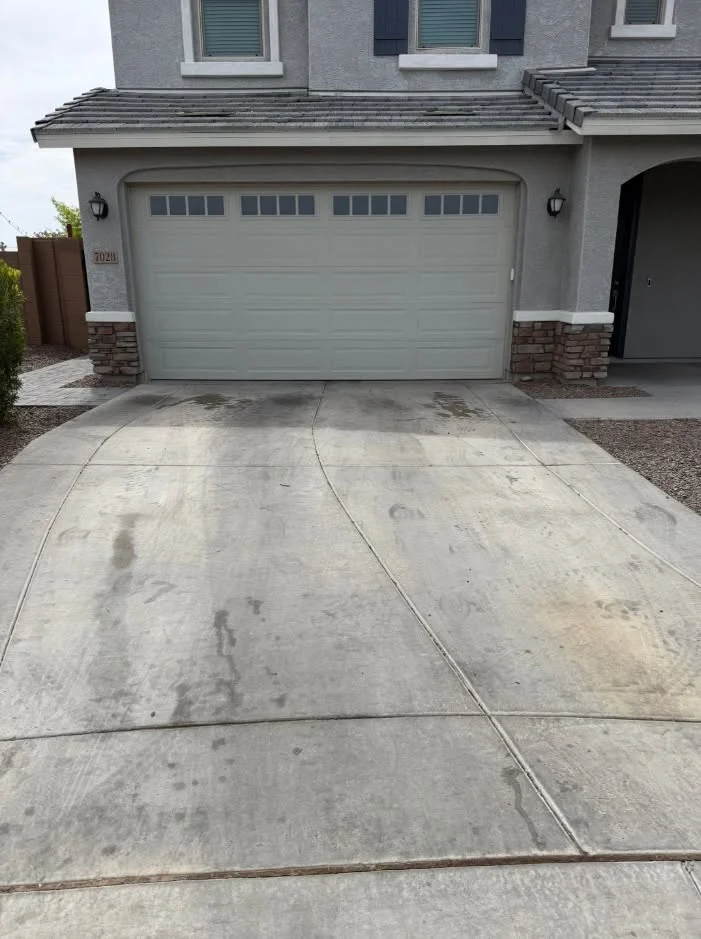
Dust, loose grime and ordinary accumulation
Material may rest primarily on the exposed face and respond to an appropriate surface-cleaning service.
- Accessible at the surface
- Often broad and uniform
- Material still determines method
 Get a Free Estimate →
Condition-led restoration · Las Vegas Valley
Not every stain is a surface-cleaning problem.
JCA provides professional stain and contamination removal for concrete, pavers and suitable exterior hardscape in the Las Vegas Valley. We evaluate oil, automotive fluids, grease, tire marks, rust and mineral-related discoloration based on the contaminant, surface, age and previous treatment. Because stains can penetrate, oxidize or leave permanent changes, we set realistic expectations instead of promising complete removal.
Surface dirt vs. embedded contamination
A dark area does not reveal its cause, depth or treatment path on appearance alone.
Material may rest primarily on the exposed face and respond to an appropriate surface-cleaning service.
Contamination may enter pores, interact with a coating or leave discoloration after loose residue is removed.
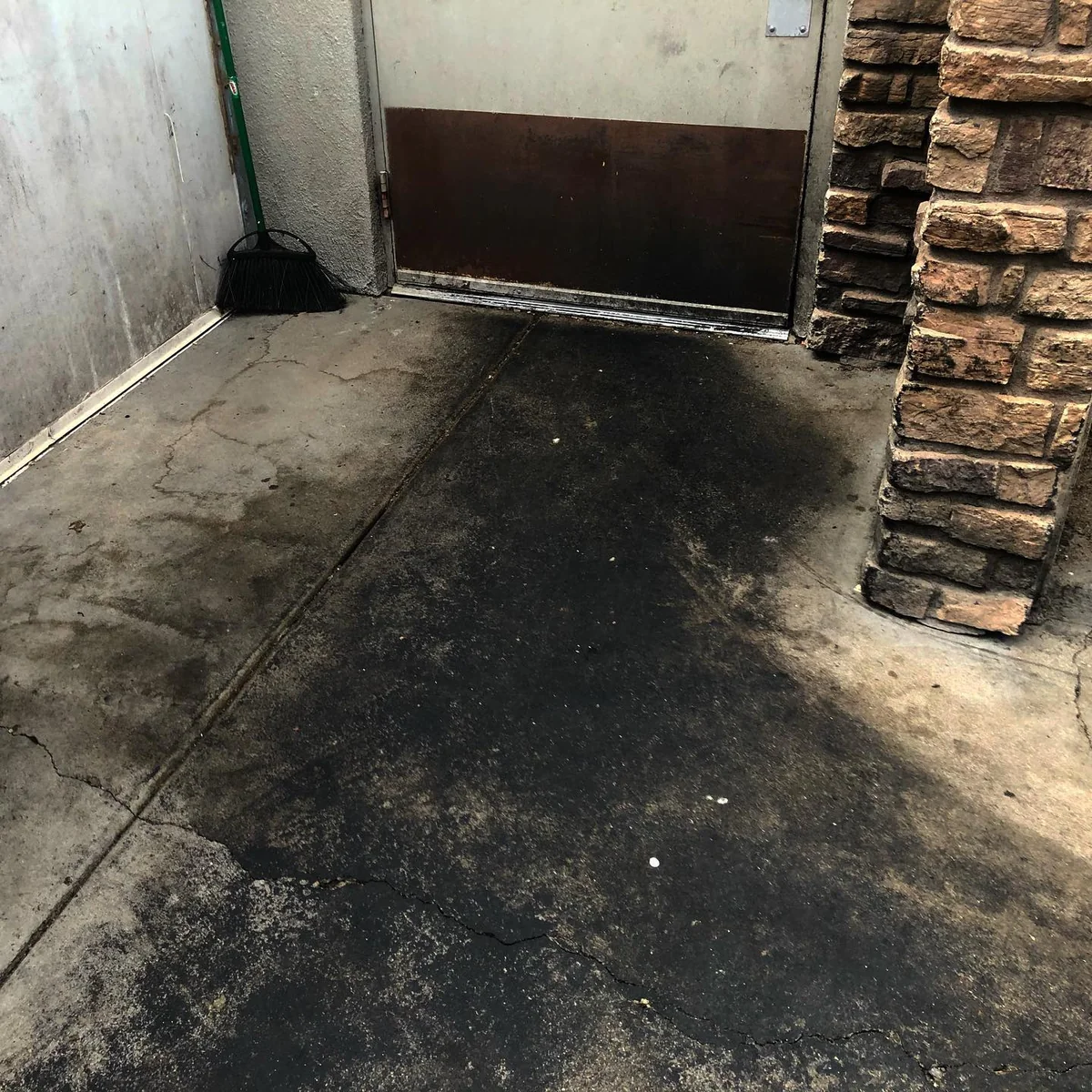
 Genuine JCA project condition
Major contamination focus
Motor oil and petroleum residue can move into concrete pores and become more difficult to improve as the stain ages in Las Vegas heat. Whole-area pressure washing may clean the surrounding driveway while leaving the embedded dark spot behind.
JCA evaluates stain age, penetration, previous attempts and concrete condition before establishing a practical restoration goal. Petroleum contamination restoration may involve progressive improvement rather than a one-pass appearance change.
Contaminant-specific restoration
You do not have to identify the chemistry yourself. JCA uses the source, surface, pattern and treatment history to determine the appropriate service category.
Transmission fluid, hydraulic fluid and other vehicle-related liquids can look similar to motor oil but have a different history and composition. Bare, sealed, painted and coated garage floors cannot automatically be treated the same way.
Automotive-fluid stain removal →Garage-floor cleaning contextSurface buildup and deeper staining can exist together around cooking areas, service zones, restaurants, drive-throughs and waste areas. Location, material, traffic and contamination shape the scope.
Concrete grease-stain removal →Dark tire marks can be rubber transfer, heat-related darkening or part of a more complicated condition. A treatment appropriate for bare driveway concrete may not fit a coated garage floor.
Color is not identification
These conditions behave differently from petroleum and ordinary buildup. Correct identification comes before treatment.
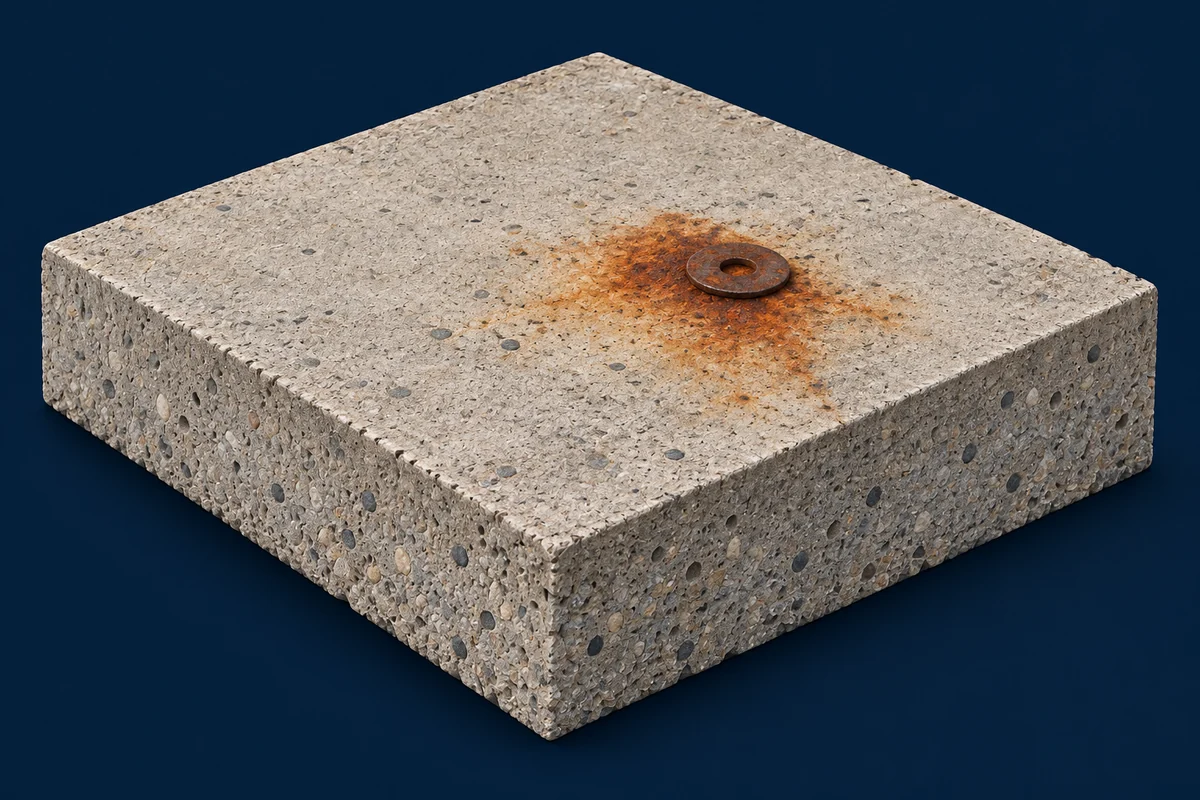
Rust-colored staining can develop beneath metal objects, near irrigation, around batteries or from other property-specific sources. The visible color does not reveal every cause.
Concrete rust-stain removal in Las Vegas →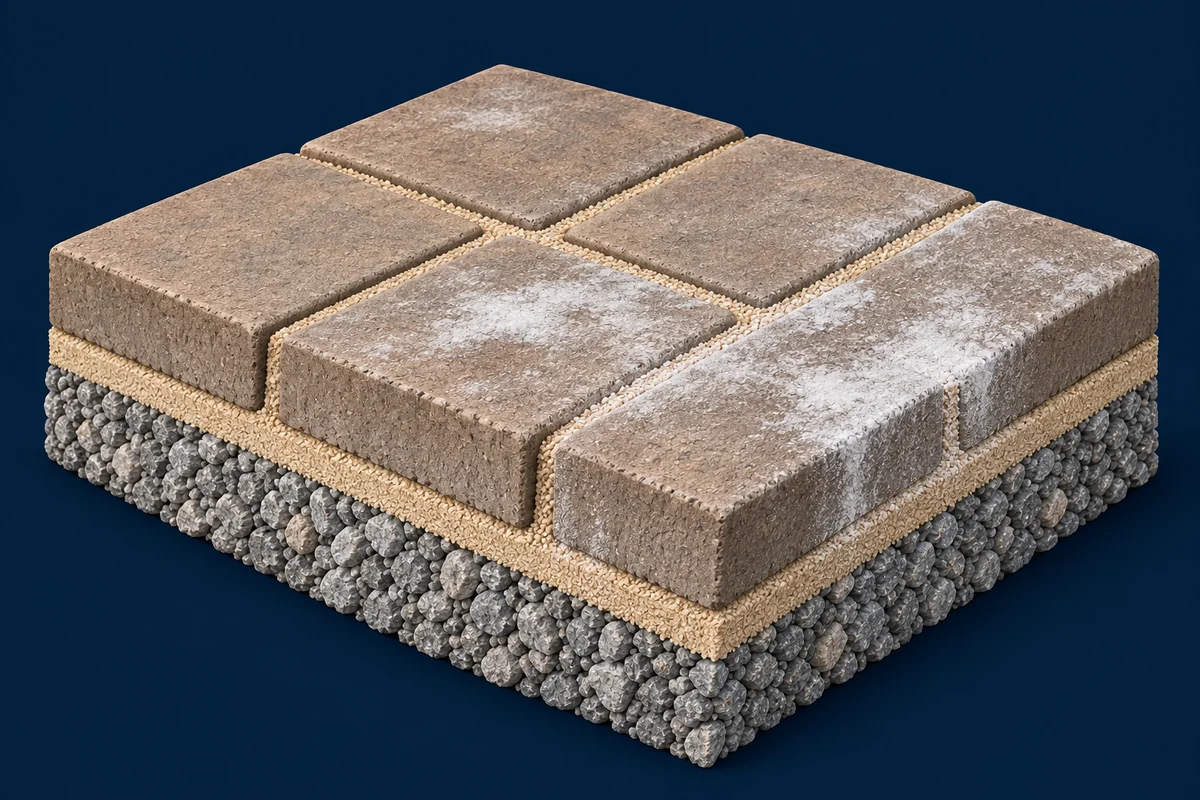
White deposits, haze and mineral discoloration can appear where water movement or hard-water exposure is involved. Existing sealer and surface damage can change what is safe or realistic.
Efflorescence and mineral-deposit removal →When the stain returned
Customers often contact JCA after pressure washing, a store-bought chemical or another company did not solve the condition. Previous attempts can spread residue, alter a coating, leave uneven cleaning or physically change the material.
JCA separates remaining contamination and removable buildup from permanent discoloration, etching and texture change. That distinction supports an honest recommendation instead of an unrealistic promise.
Send the Current Condition →Genuine JCA work
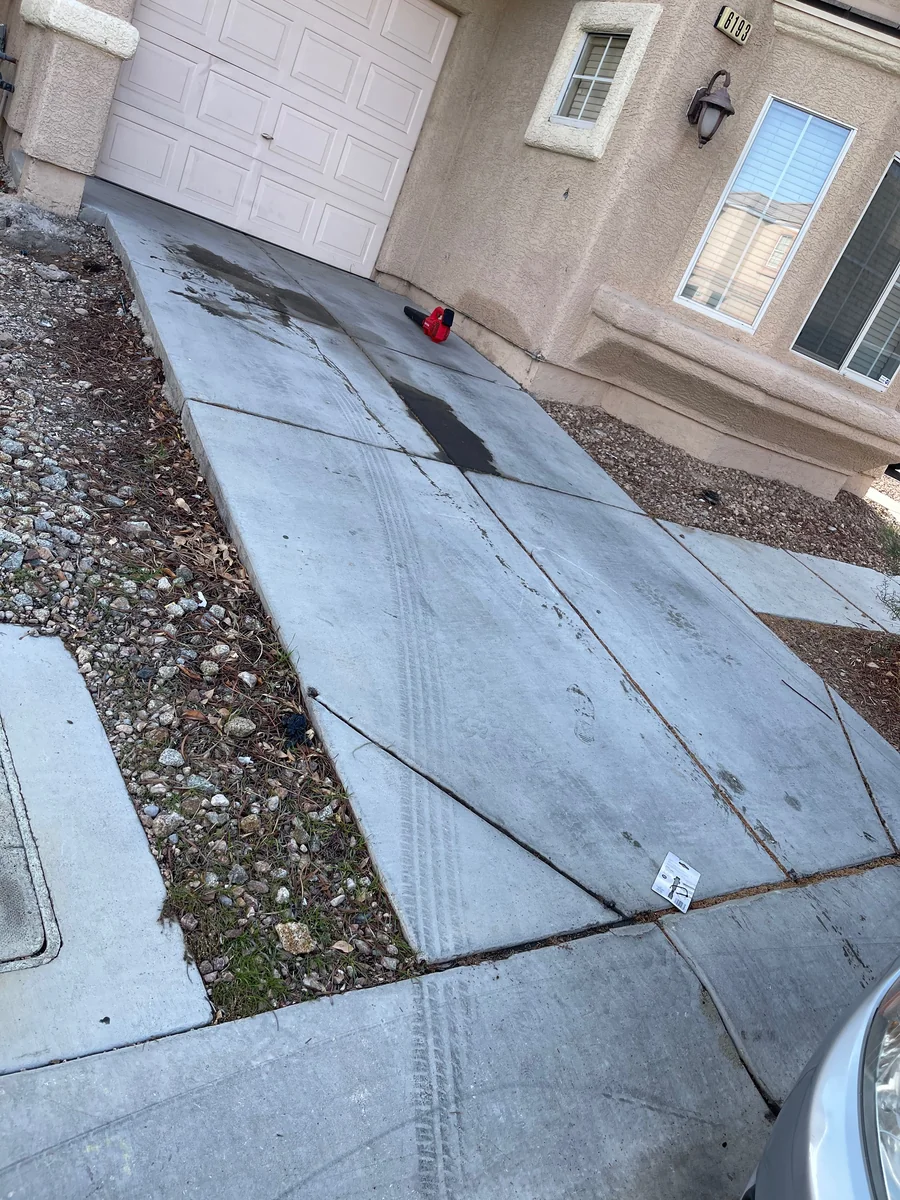
Drag each divider to compare the documented project condition with the completed surface. Results vary by material, depth, age and treatment history.
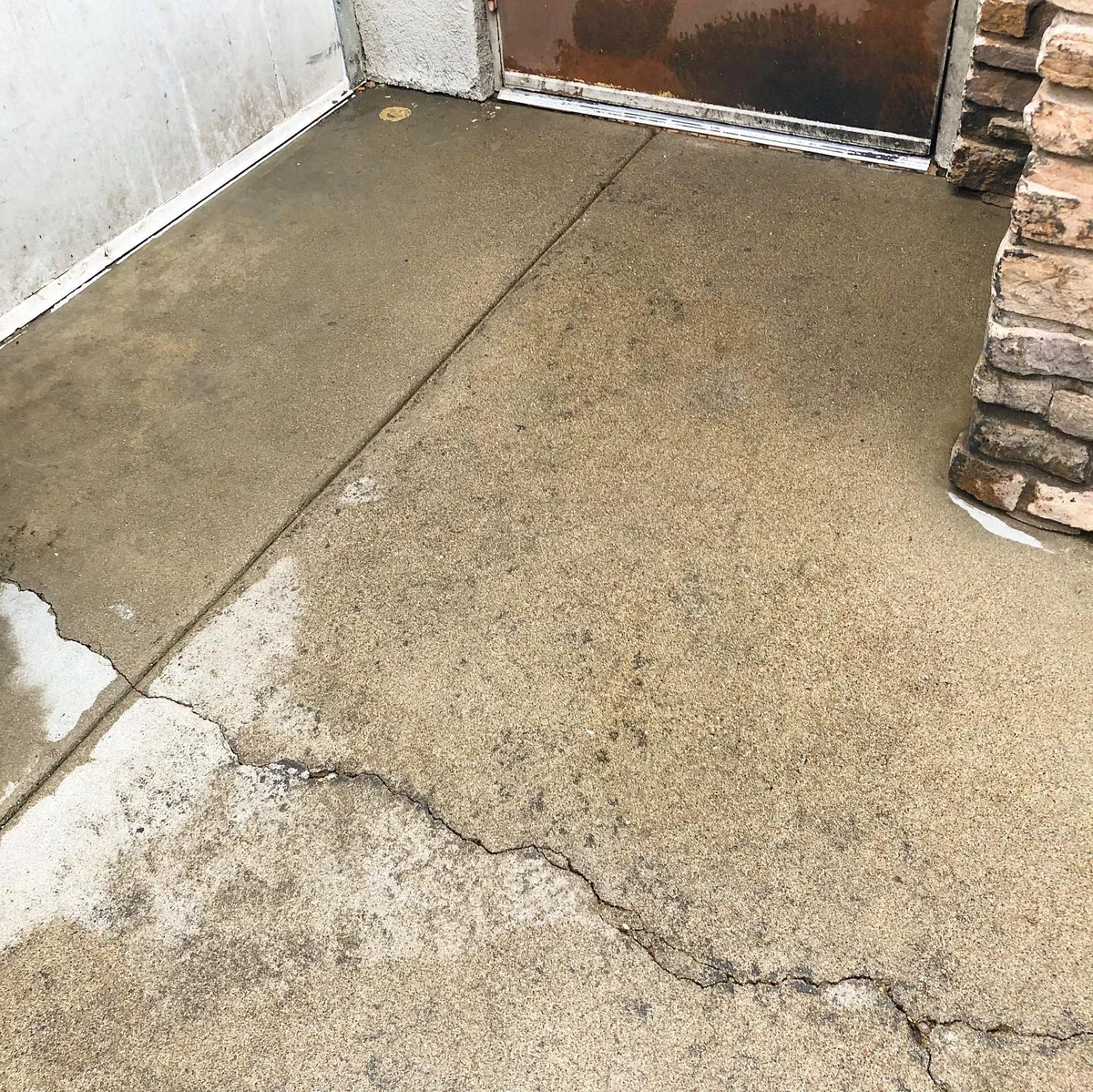
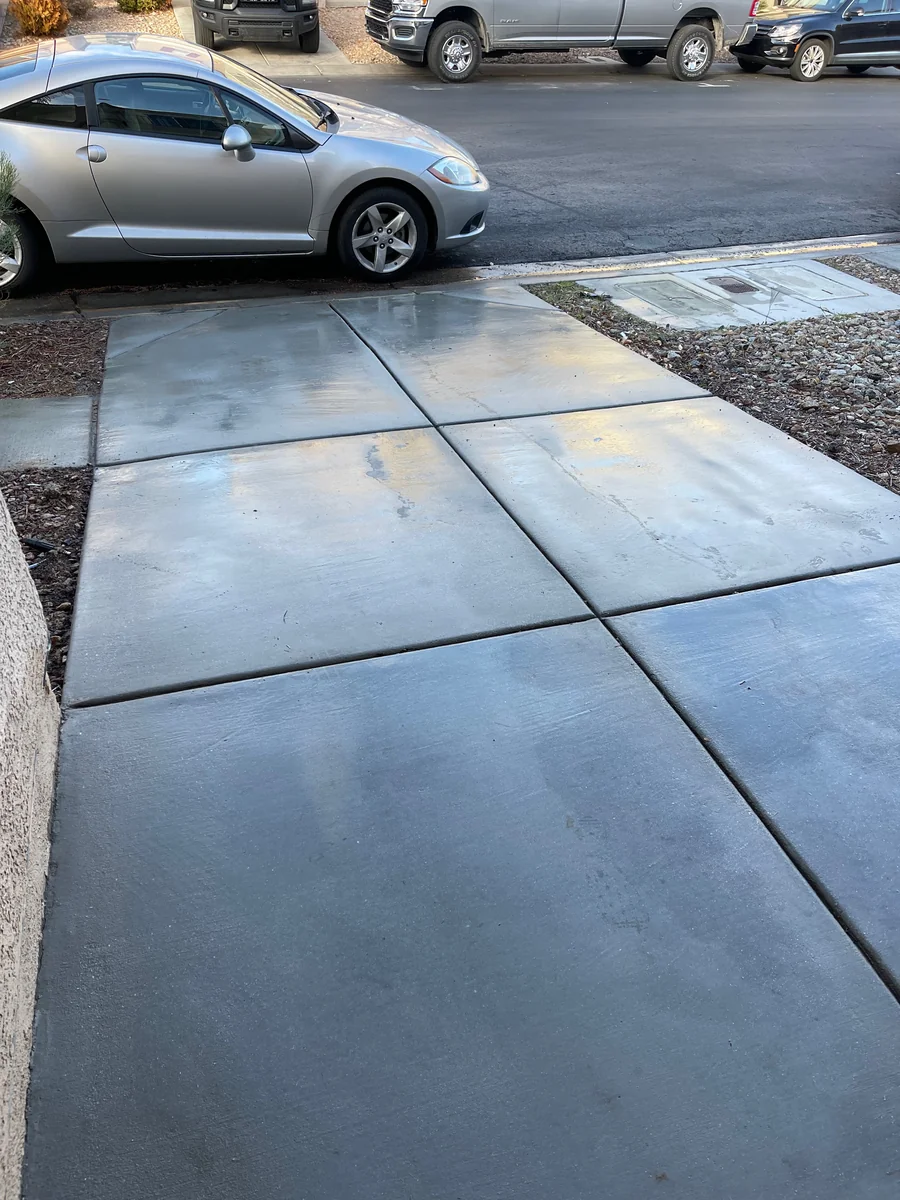
These images document specific projects. They do not guarantee the same result on another material, stain or prior treatment.
Material-specific service path
Paver oil stains deserve their own evaluation because individual units, joints and previous sealer affect both the condition and the service plan. A paver stain should not be treated as if it were an identical spot on bare concrete.
JCA reviews the full paver area, close-up contamination, joint condition and finish before setting expectations.
Visit the paver oil-stain removal service →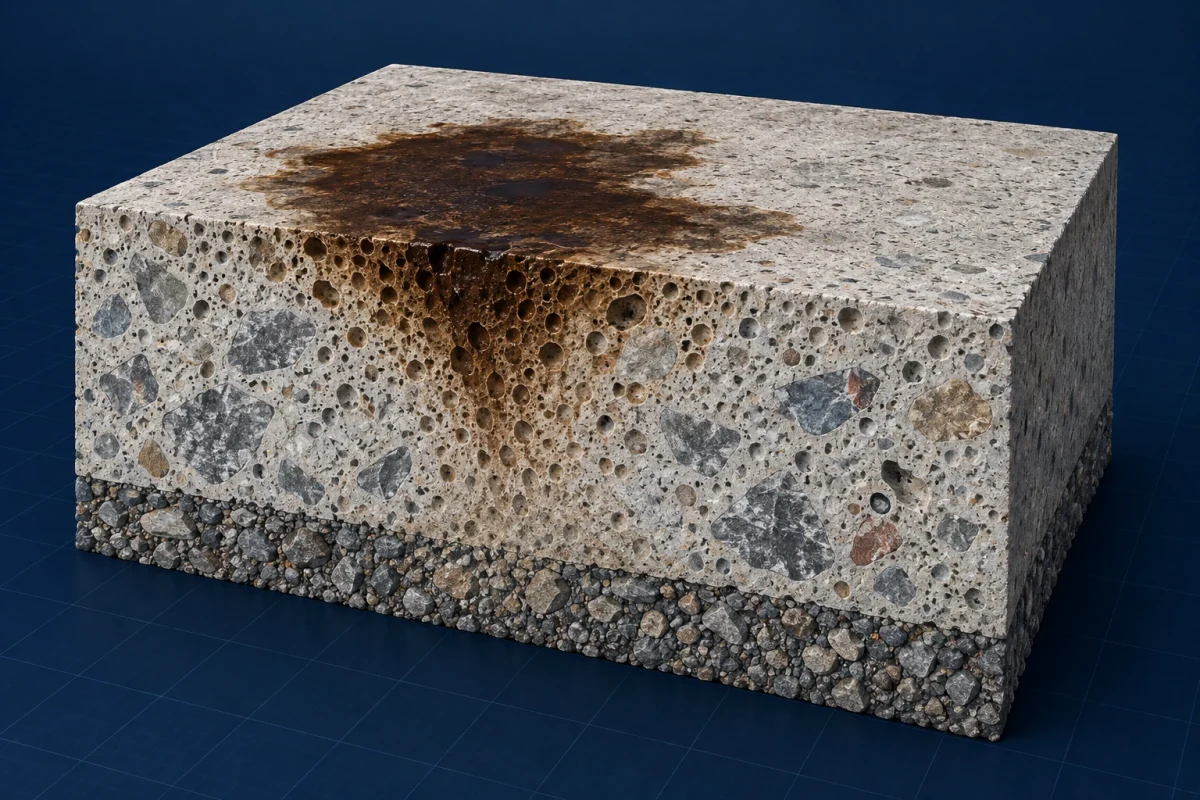
A supporting material study
Explore JCA’s approved 3D Surface Lab to see why visible staining can relate to material structure below the exposed face.
Explore the 3D Surface Lab ↗Contamination questions
Clear answers about stain depth, returning oil, hot water, previous cleaning and realistic results.
Often it does not. Porous concrete can hold petroleum contamination below the visible surface. Pressure washing may improve what is accessible on top while deeper residue remains and later migrates toward the face. Send a wide photo and close-up through Get an Estimate for preliminary review.
No. A responsible recommendation accounts for material, stain age, penetration, desert exposure, previous attempts and existing damage. JCA establishes a realistic improvement goal and explains important limitations before work begins.
Heat may be useful for certain oily conditions, but deeper petroleum contamination can require a broader restoration approach. Surface compatibility and the actual contamination determine whether hot-water capability belongs in the plan.
Contaminant type, material porosity, age, depth and previous treatment can all affect the result. A product may address loose residue without resolving contamination held within the material.
Yes. Concrete is porous, and petroleum fluids may penetrate below the visible face. The amount, age, heat exposure and concrete condition influence what remains visible and what improvement may be practical.
Automotive fluids can behave differently depending on composition, age, depth and surface condition. JCA evaluates each condition individually rather than assuming it should be treated exactly like motor oil.
Excessive or aggressive pressure can alter concrete texture, expose aggregate or leave visible marks. That physical change is different from contamination and cannot be reversed by additional cleaning.
No. Rust and petroleum are different conditions and may require different restoration categories. The source, surrounding material and previous treatment should be identified first.
Mineral deposits or efflorescence may be involved rather than ordinary dirt. Water movement, hard-water exposure, sealer and surface condition can all affect the visible deposit.
The source, color, location, texture and history provide clues, but photos do not confirm every contaminant. Send the full area and close-ups; JCA may recommend an on-site assessment before final identification.
Good photos may be enough to begin a preliminary assessment. Complex conditions, uncertain coatings or larger projects may require an on-site evaluation before final identification, scope and pricing.
Yes. Some products can spread residue, alter the surface or react with later treatment. Excessive pressure can also create lines or etching. Tell JCA what was tried so the existing condition can be assessed accurately.
Yes, where the material and condition fall within JCA’s scope. Concrete and pavers have separate service paths because their surfaces, joints and previous sealers can require different decisions.
Photo assessment
Send the surface, condition and project details. Photos are optional and support a preliminary review only. Final scope or pricing may require an on-site assessment.